Shading Your Backyard from the Texas Sun
In San Antonio, shade is what decides whether a deck gets used from June to September. Planning it from the start, with the right mix of pergola, arbor, gazebo or cover, turns the hottest part of the yard into the coolest room of the house.
Why does the deck sit empty all summer?
Do you look out at your patio in July and decide it’s just too hot? With 100-degree afternoons and sun reflecting off every surface, even a beautiful deck can feel like a griddle. The furniture fades, the cushions live in the garage and the grill only comes out after dark.

A lesson many families learn the hard way
J.R. hears it often: the deck went in, it looked great, and then summer arrived. Many families don’t enjoy their decks for months at a time simply because no one planned for shade. Adding it afterward is possible, but it costs more and rarely fits as well as shade designed in from the start.
The right shade for the way you live
Homeowners who plan for shade find there’s an option for every yard and budget:
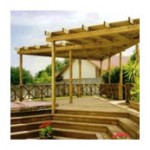
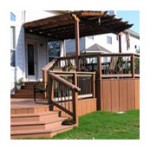
- Arbors and pergolas give filtered shade and let the breeze through. Slat spacing, shade cloth or curtains can add more cover. See pergolas and arbors.
- Covered decks block sun and rain completely and protect your furniture and the deck itself.
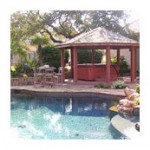
- Gazebos create a destination with a roof, built-in seating, lighting and a ceiling fan. See gazebos.
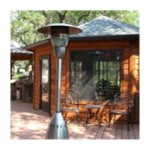
- Patio enclosures add screens or glass to keep out bugs and weather. See enclosures.

A ceiling fan moves air on still evenings, and wiring is easiest to plan while the structure is designed. Not ready for a full roof? A pergola can often be built so it can be covered later.
Ready to get out of the sun?
Let’s find the right shade for your yard and your budget.
Ask the Right Questions
Do you build covered decks?
Yes, we can combine deck construction with shade structures like pergolas, arbors, or solid patio covers. Covered areas extend usability in Texas heat and light rain. We build these as integrated projects to ensure structural compatibility and cohesive design.
Do you install fans on pergolas?
Yes, we can design pergolas to accommodate ceiling fans, which make a significant comfort difference in Texas heat. This requires proper structural support for fan mounting and electrical rough-in. We coordinate with electricians as needed for fan installation.
Can you build a pergola with curtains or shades?
Yes, we can design pergolas with provisions for fabric elements—retractable canopies, curtain rods for drapes, or mounting points for shade sails. These additions provide flexible sun and privacy control beyond what fixed rafters offer. We discuss your preferences during design planning.
Can a pergola be converted to a covered patio later?
In many cases, yes. If you're considering future roof addition, we can discuss designing your pergola with that conversion in mind—including appropriate structural capacity and roof pitch considerations. Planning ahead is more economical than retrofitting later.
Can you add a ceiling fan to my gazebo?
Absolutely—we recommend ceiling fans for most gazebos given the Texas climate. Fans provide crucial air circulation that makes gazebos comfortable even on warm days. We design proper structural support for fan mounting and include electrical as standard.
What’s the difference between a gazebo and a pavilion?
Gazebos typically have a raised floor, defined shape (often octagonal), and partial enclosure with railings or screens. Pavilions are generally open-sided structures with roofs supported by columns, often larger and rectangular. We build both; the right choice depends on your intended use and aesthetic preference.
Should I get a pergola or a solid roof?
Pergolas provide filtered shade, architectural interest, and cost less than solid roofs. Solid patio covers offer complete rain and sun protection. Consider how you'll use the space—if you want outdoor living during light rain, a solid cover adds value. For shade and beauty, pergolas excel.